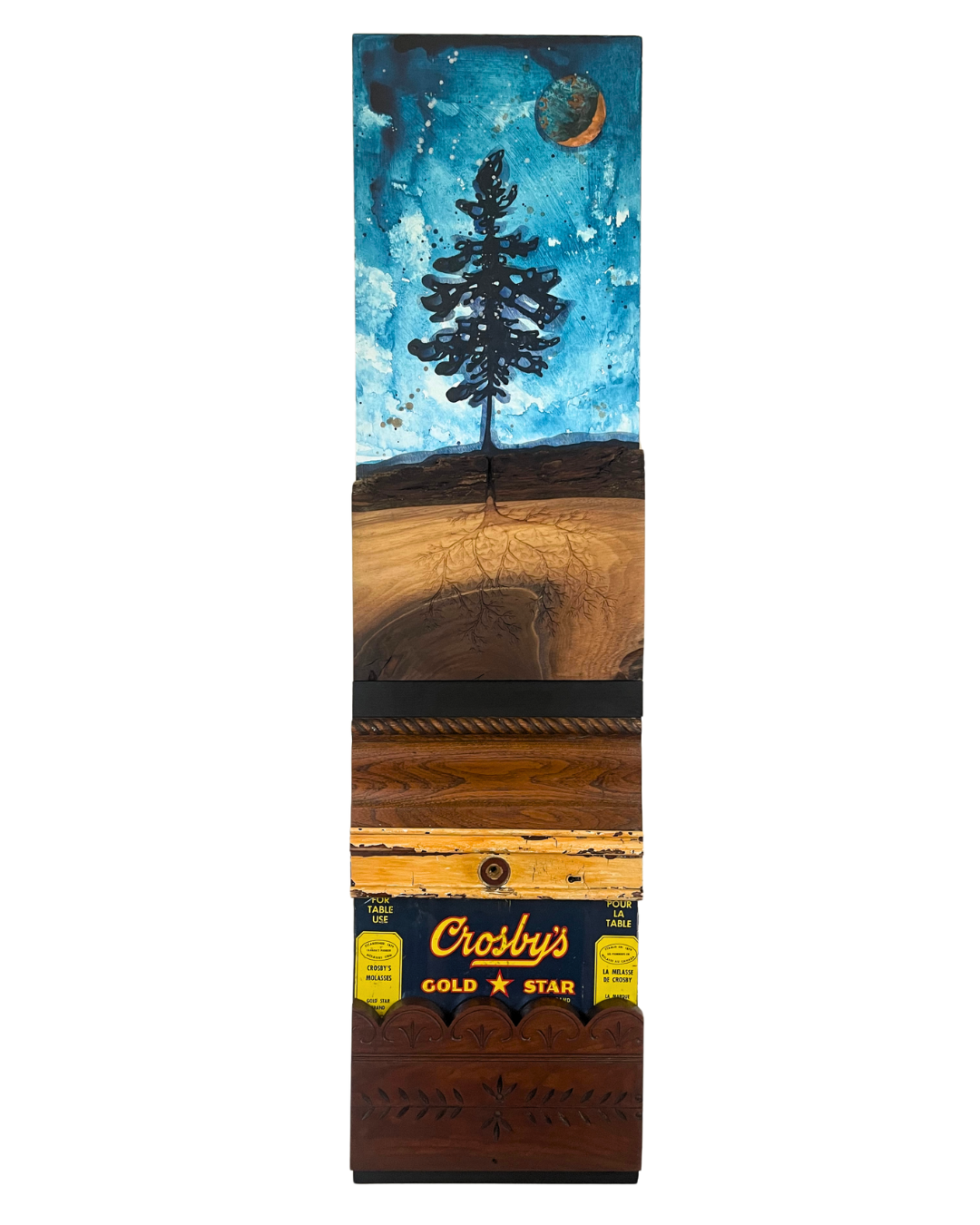
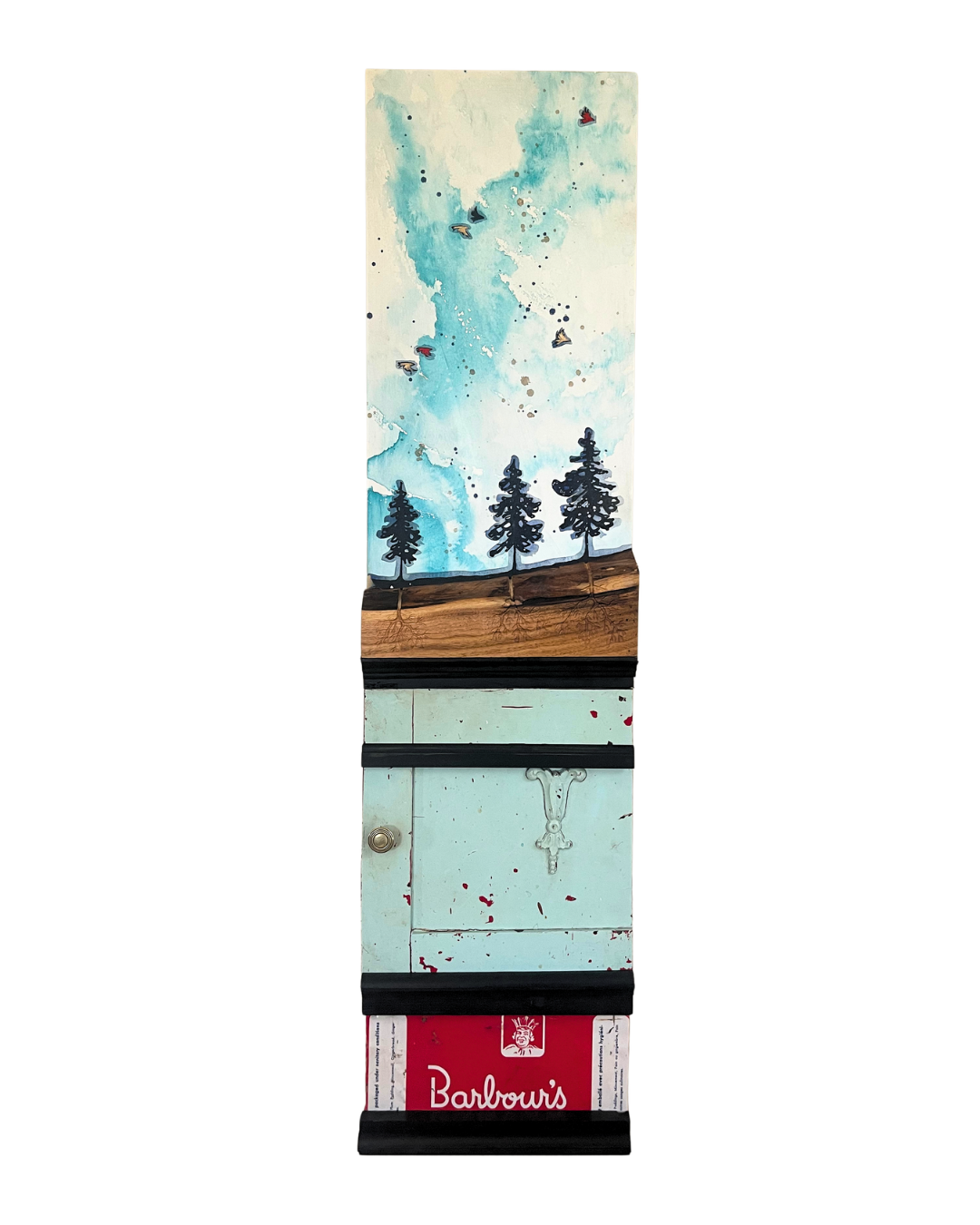
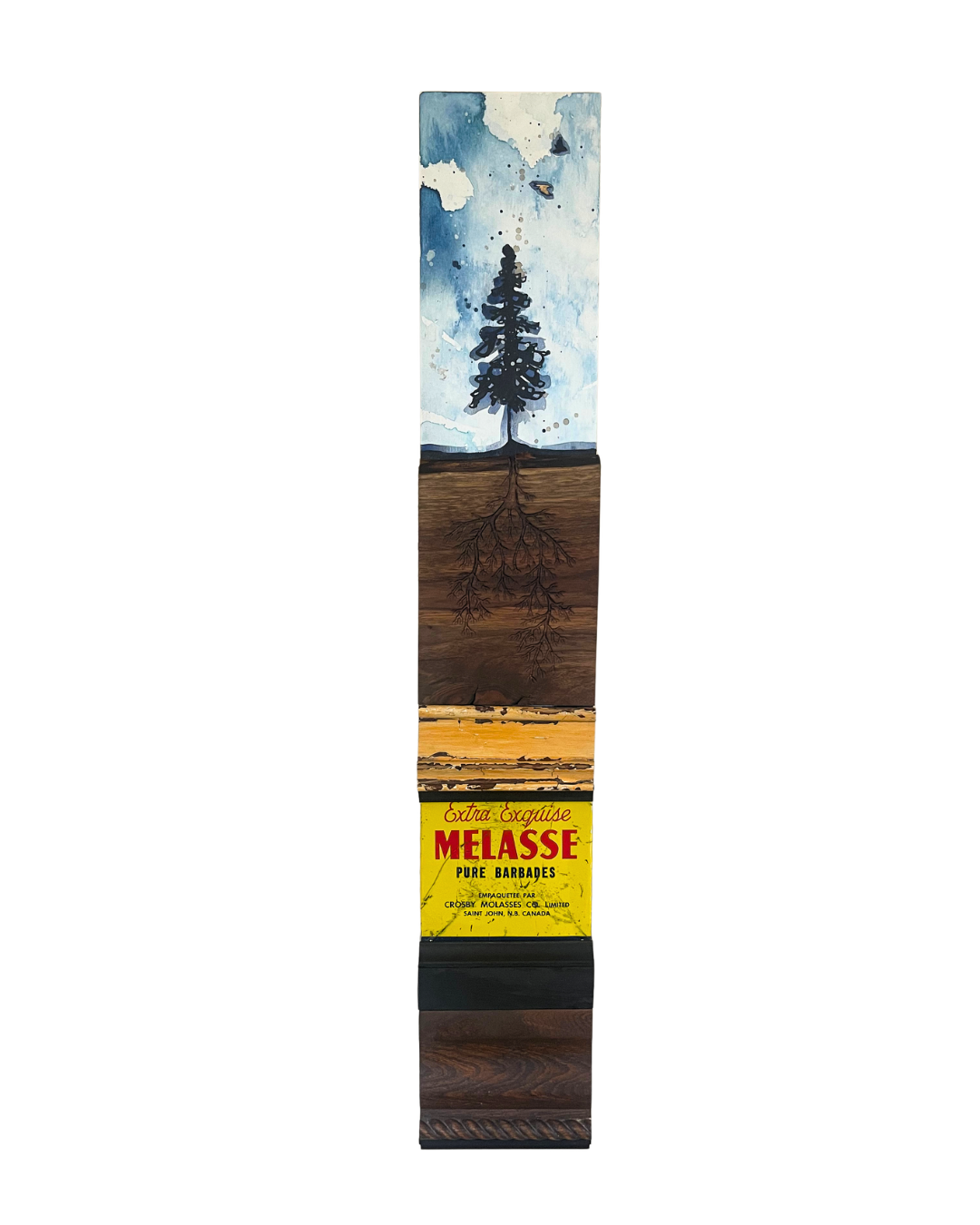
Rogue Goat began in 2011 with scrap hardwood flooring, so the opportunistic use of found materials is integral to its evolution. My father was an antique dealer who specialised in 17th- and 18th-century English furniture. Along with too many mismatched chairs, the storage areas of his shops were filled with orphan bits of moulding, carvings, corbels, & cabinet doors whose craftsmanship insisted on their keeping.
As an artist, these bits and pieces have a special resonance as “things that can become”, the most insistent of the whispers an artist hears. When I moved from Ontario to New Brunswick, these materials were amongst the hardest decisions to make of what to leave and what to bring east. This collection incorporates the very last remnant’s of my father’s passion for craftmanship and provenance.
I had used vintage tins in previous work, chosen for colour and decorative value. I bought a few at Loyalist Coin and Collectibles in the fall of 2025 but as I was cutting them apart, for the first time I really considered the places the tins originated. A tea tin from Halifax, a honey can from Elmwood, ON, not far from where we used to live. Business names that held not just the legacy of their namesakes, but also a way of life through the men and women who would have laboured on the lines and used the goods in their homes, the daily lives that revolved around the fulcrum of the factory. I realised that I could be strategic about this, choosing tins deliberately to illustrate a uniquely Saint John experience of place.
Over the fall and winter, I scoured local auctions and Facebook marketplace for tins and crates that bore the marks of Saint John. It’s proven easiest to find Crosby Molasses and Barbour’s branded items, so they begin this new series. Lantic, Irving, Slipp & Flewelling, Gandy & Allison, James Pender were subsequently collected while Moosehead, Estabrooks, Red Rose, Rankine and King Cole coveted.
Each piece is a love letter to Saint John, to history, to making.